
Why Can’t I Fall Asleep? Common Causes of Insomnia
The answer isn’t always obvious. Sleep disruption has many causes, and in most cases, more than one factor is at work. Understanding what’s interfering with your sleep is the first step toward doing something about it.
Your Brain Is Still Running After You Stop
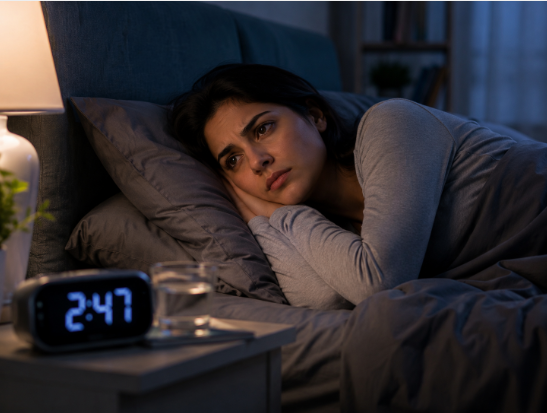 The most common reason people can’t fall asleep is a nervous system that won’t downshift. Sleep onset requires the brain to transition from alert, active states to quieter ones. When that transition fails, it’s usually because something is keeping arousal levels elevated.
This is called hyperarousal, and it can be physiological, cognitive, or emotional. Your heart rate stays slightly elevated. Your mind keeps generating thoughts. You feel tired but wired. The bed stops feeling like a place of rest and starts feeling like a place where you lie awake and worry about not sleeping.
Hyperarousal is the common thread running through most insomnia cases, even when the trigger looks different from person to person.
The Most Common Causes of Insomnia
Stress and Anxiety
Stress activates the hypothalamic-pituitary-adrenal (HPA) axis, flooding the body with cortisol. Cortisol is designed to keep you alert during perceived threats. It does its job well. The problem is that modern stressors, such as a difficult conversation coming tomorrow, a financial worry, and an unresolved conflict, don’t resolve at bedtime. The brain keeps processing. Cortisol stays elevated. Sleep gets blocked.
Anxiety disorders are among the most common co-occurring conditions in people with chronic insomnia. Generalized anxiety disorder, panic disorder, and social anxiety all involve baseline hyperarousal that makes sleep onset significantly harder. Many people treat their insomnia without ever addressing the anxiety driving it, which is why the sleep problems keep coming back.
Depression
Depression and sleep have a complicated relationship. Most people assume depression causes oversleeping, and it can. But early morning awakening and difficulty falling asleep are also very common in depressive disorders, particularly melancholic depression. The brain’s circadian regulation and sleep architecture are directly affected by the neurochemical changes associated with depression. Fixing the sleep without treating the depression rarely works long-term.
Conditioned Arousal
This one catches people by surprise. After weeks or months of lying awake in bed, the brain starts to associate the bed itself with wakefulness. Sleep becomes the exception; arousal becomes the default response to getting into bed. Psychologists call this conditioned or learned insomnia, and it’s one of the main reasons insomnia becomes chronic even after the original trigger resolves.
You might have been through a stressful period that started the problem. The insomnia stayed.
Poor Sleep Hygiene
Sleep hygiene gets oversimplified, but the underlying science is real. The behaviors people bring to the hours before sleep have a direct effect on sleep onset. Bright light, particularly blue light from screens, suppresses melatonin production. Eating late keeps the digestive system active. Inconsistent bedtimes disrupt circadian rhythm, the roughly 24-hour internal clock that regulates when your body expects to be awake or asleep.
Caffeine has a half-life of approximately five to seven hours. A 3 p.m. coffee still has half its caffeine load in your system at 8 p.m. For people sensitive to caffeine, afternoon consumption alone can significantly delay sleep onset.
Circadian Rhythm Disruption
Circadian rhythm disorders are distinct from general poor sleep hygiene. Delayed Sleep Phase Disorder (DSPD) is one of the most common: the person’s internal clock runs late, making it genuinely difficult to fall asleep before 2 or 3 a.m. regardless of effort. They’re not choosing to stay up. Their biology is set to a different schedule.
Shift workers, frequent travelers crossing time zones, and people with irregular schedules are particularly vulnerable to circadian disruption. The body expects light and dark cues at consistent times. When those cues are inconsistent, sleep becomes unpredictable.
Medications and Substances
Several commonly prescribed medications interfere with sleep. Stimulants used to treat ADHD can delay sleep onset if the dose timing isn’t managed carefully. Certain antidepressants, particularly SSRIs taken in the evening, are activating for some people. Beta-blockers, corticosteroids, and some thyroid medications all affect sleep architecture in different ways.
Alcohol is worth addressing specifically because many people use it as a sleep aid. Alcohol does speed sleep onset, but it fragments sleep in the second half of the night as the body metabolizes it, reducing REM sleep and increasing nighttime awakening. Regular alcohol use as a sleep strategy reliably makes insomnia worse over time.
Underlying Medical Conditions
Chronic pain keeps the nervous system activated during the night. Restless leg syndrome (RLS) creates uncomfortable sensations in the legs that worsen at rest, making it hard to stay still long enough to fall asleep. Gastroesophageal reflux (GERD) causes discomfort that’s often worse when lying down. Hyperthyroidism elevates metabolic rate and body temperature, both of which interfere with sleep.
Sleep apnea is a separate category. It doesn’t usually prevent falling asleep. It causes repeated interruptions throughout the night, leaving people exhausted despite adequate time in bed. If you fall asleep easily but wake up unrefreshed, snore heavily, or have been told you stop breathing during sleep, sleep apnea warrants evaluation before assuming the problem is insomnia.
Racing Thoughts and Cognitive Arousal
Even without a formal anxiety disorder, some people are simply high cognitive processors whose minds don’t idle easily. Problem-solving, planning, replaying conversations, and imagining scenarios. The brain treats the quiet of the bedroom as prime time for unfinished mental business.
This is especially common in people with ADHD, whose regulatory systems have more difficulty shifting out of active processing modes. The experience of lying awake with a busy mind is a very common complaint in undiagnosed or undertreated ADHD.
Acute vs. Chronic Insomnia
Insomnia is classified by how long it lasts. Acute insomnia lasts days to a few weeks and is usually tied to an identifiable stressor. A job loss, a breakup, a medical scare. Most people recover once the trigger resolves.
Chronic insomnia is defined as sleep difficulty occurring at least three nights per week for three months or longer. At that point, the original cause may be less relevant than the conditioned patterns that have developed around sleep. Chronic insomnia is a disorder in its own right and responds best to structured treatment rather than waiting it out.
If you’ve been dealing with sleep problems for more than a month, the pattern is unlikely to resolve on its own.
When Insomnia Is a Symptom of Something Else
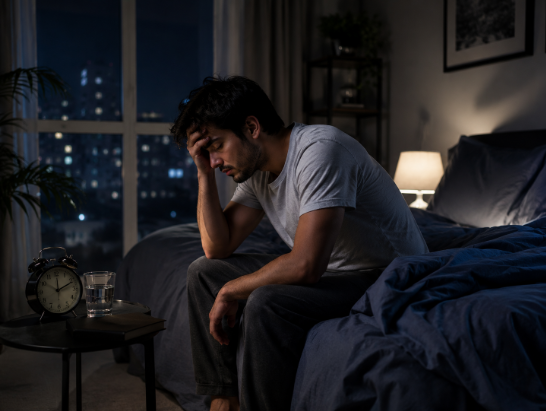 This is the part most sleep hygiene articles skip. In many cases, insomnia is not a standalone problem. It’s a symptom of an underlying psychiatric or medical condition that hasn’t been identified or treated.
Untreated anxiety disorders, depression, PTSD, and bipolar disorder all produce sleep disturbance as a core feature. Treating the sleep without treating the underlying condition gets partial results at best. A psychiatrist can evaluate whether a sleep complaint reflects an underlying disorder, recommend appropriate treatment, and adjust medications that may be contributing to the problem.
People who have tried every sleep hygiene recommendation without lasting improvement often benefit most from this kind of evaluation. Understanding the full picture often changes the treatment approach.
If sleep problems are affecting your daily functioning, the team at PsychBright Health offers same-week evaluations for sleep disorders and related conditions, with telehealth available across California and in-person appointments in Los Angeles. Learn more about how sleep disorders are diagnosed and treated.
Frequently Asked Questions
What is the most common cause of chronic insomnia?
The most common driver of chronic insomnia is a combination of psychological stress and conditioned arousal. After repeated nights of lying awake, the brain learns to associate bed with wakefulness rather than rest. Even when the original stressor resolves, the conditioned pattern persists. This is why cognitive behavioral therapy for insomnia (CBT-I) is considered the first-line treatment for chronic insomnia, since it directly targets these learned patterns rather than relying solely on medication.
Can anxiety cause insomnia even if I don’t feel anxious during the day?
Yes, and this is very common. Anxiety doesn’t always present as obvious worry. Some people carry baseline hyperarousal throughout the day without labeling it as anxiety, and it becomes most apparent at night when external stimulation drops and the nervous system should be downshifting. If you lie down and find your mind accelerating rather than quieting, elevated underlying anxiety is a likely contributor. A psychiatric evaluation can help clarify whether an anxiety disorder is involved.
Is it normal to fall asleep easily but wake up in the middle of the night?
Sleep maintenance insomnia, meaning difficulty staying asleep rather than falling asleep initially, is very common and often has different causes than sleep onset insomnia. Middle-of-the-night awakening is frequently associated with depression, sleep apnea, alcohol use, hormonal changes, chronic pain, or circadian rhythm irregularities. If this is your pattern, an evaluation that addresses the full picture, not just sleep hygiene habits, is likely to be more helpful than behavioral adjustments alone.
When should I see a psychiatrist instead of a primary care doctor for sleep problems?
A psychiatrist is the right choice when insomnia is accompanied by mood changes, anxiety, trauma history, difficulty concentrating, or substance use. Psychiatrists can evaluate whether a psychiatric condition is contributing to the sleep problem, prescribe medications when appropriate, including regulated options that primary care providers may be reluctant to initiate, and coordinate a comprehensive treatment plan. If you’ve already tried sleep hygiene improvements and basic interventions without success, a psychiatric evaluation is a logical next step.
Do sleep medications work for insomnia?
Sleep medications can be effective for short-term use and in some cases for longer-term management when indicated, but they work best as part of a broader treatment plan rather than as the only intervention. The type of medication that’s appropriate depends heavily on the cause of the insomnia, any co-occurring conditions, and other medications you’re taking. A board-certified psychiatrist can evaluate these factors and recommend a treatment approach, which may include medication, cognitive behavioral therapy for insomnia, or both.
Can ADHD cause insomnia?
ADHD is strongly associated with sleep problems, including difficulty falling asleep, racing thoughts at bedtime, and irregular sleep schedules. The regulatory systems affected by ADHD make it harder for the brain to shift out of active processing modes in the evening. Some stimulant medications used to treat ADHD can also affect sleep timing if not managed carefully. If you have both ADHD symptoms and sleep problems, addressing them together with a psychiatrist familiar with both conditions typically produces better outcomes than treating each one separately.
PsychBright Health
PsychBright Health is a psychiatry practice based in Los Angeles, led by Dr. Daniel Duel, MD, a psychiatrist board-certified in general adult psychiatry, with extensive experience in addiction medicine. The practice sees patients in-person at 1180 S Beverly Dr #700, Los Angeles, CA 90035, and via telehealth across all of California. Accepted insurance includes Aetna, Blue Shield, UHC, Cigna, Anthem, Medicare, and Medicare Advantage.
If your sleep problems are interfering with your work, relationships, or daily life, the right starting point is an evaluation that looks at the full picture. Request an appointment or call (213) 584-2331 to speak with the team.
PsychBright Health1180 S Beverly Dr #700
Los Angeles, CA 90035
(213) 584-2331
Monday through Friday, 8 am to 5 pm
Serving Los Angeles, West Hollywood, Beverly Hills, Santa Monica, Culver City, and Brentwood. Telehealth available statewide across California.